


The New Rules of Creatine: Performance, Longevity, and Brain Function

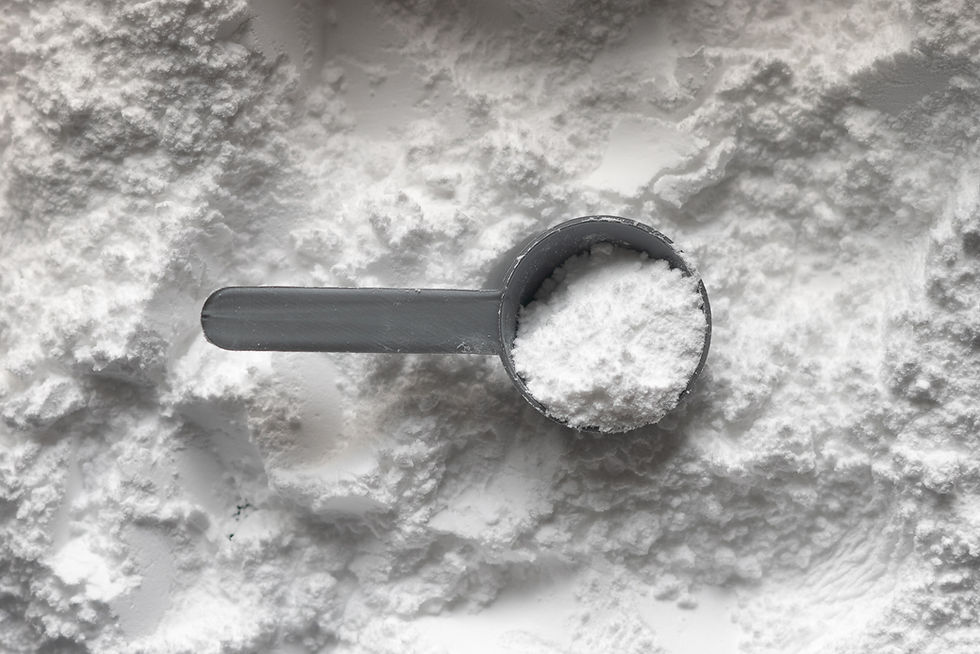
Let’s be honest: if you’re reading this, you probably already have a tub of white powder sitting somewhere on your kitchen counter, looking vaguely like an illegal shipment.
Creatine monohydrate is the undisputed king of sports supplements.
It has been studied more than your favorite "influencer" has studied their own...........reflection.
If you think creatine is just a simple "muscle builder" for 20-year-olds trying to squeeze out an extra rep on the bench press and bust another seem on that extra tight T-shirt, you might want to rethink, its for that and A LOT more.
Recent clinical data has completely blown past the old textbook definitions.
We are no longer just talking about filling up your muscles; we are talking about protecting your brain, slowing down the biological clock, safeguarding your kidneys, and fueling elite endurance engines.
Whether you’re running a business, building bulletproof longevity, training for a Hyrox or an ultra-marathon, here is your updated, evidence-backed playbook.
Rule 1: The Executive Edge

If you are a business owner or executive, your primary asset isn't (just) your biceps—it's your decision-making capacity.
Maybe you are paid to solve complex problems, manage high-stakes stress, and stay sharp when everyone else is flagging.
But high cognitive load, late-night strategy sessions, back-to-back travel, and the inevitable sleep deprivation that comes with running an business drain your brain's energy reserves.
When your brain runs low on cellular energy (ATP), it enters "Low Power Mode." Your executive function drops, your patience thins, and your mental clarity gets foggy.
Your brain is protected by a strict gatekeeper called the blood-brain barrier.
It behaves exactly like a grumpy bouncer outside an exclusive VIP lounge, making it tough for standard supplements to get in.
However, high-resolution brain imaging shows that high-dose oral creatine supplementation can force its way past the bouncer, increasing brain phosphocreatine stores by 10% to 15%.
The Sleep Deprivation Buffer: Creatine won't turn you into Einstein on a normal Tuesday, but it acts as a cognitive life jacket. When you are surviving on four hours of sleep before a major pitch or meeting, creatine rapidly regenerates ATP directly in your prefrontal cortex. It keeps the mental lights on when you are running on fumes.
Working Memory & Focus: Clinical trials show moderate, measurable boosts in task-oriented working memory and spatial focus under high-stress conditions. It’s the tool that keeps you sharp at 4:00 PM when the rest of the boardroom is reaching for their third sugary coffee.
Rule 2: The StrongLife Shield (Insurance Policy Against Aging)
For our StrongLife crew and anyone want to stay jacked, strong and capable as they become more "battle hardened", your goals naturally shift toward staying unfuckingstoppable for the next forty years.

As we age, we face two inevitable biological taxes: sarcopenia (the natural loss of muscle mass) and dynapenia (the loss of muscle strength).
Dynapenia actually happens faster and is the number one predictor of losing your vitality and independence later in life.
The Anti-Catabolic Shield: Creatine doesn't just help you build new tissue; it stops your body from breaking down what you already have. It preserves your high-threshold, fast-twitch muscle fibers—the exact ones responsible for catching your balance if you slip or keeping your posture rock-solid at a desk.
Cellular Volumisation: Creatine pulls water directly into the cell. This isn't "bloat"—it’s intracellular hydration. Think of it like inflating a car tire to its optimal pressure. This cellular pressure creates a structural signaling cascade that tells your body to synthesize protein and keep bone mineral density high.
The Long-Term Shield: Forward-looking neuroprotection research points to creatine acting as a potent antioxidant in the central nervous system. Keeping your brain’s energy reserves topped up protects mitochondrial health, effectively slowing down early cognitive decline and protecting brain volume as we age.
Rule 3: The Secret Weapon for Performance
To my athletes; triathletes, Hybrid crew and Hyrox competitors: They know creatine will NOT make them heavy and slow.

That old-school fear is costing you performance. Yes, week one might bring a spike on the scale, but that is pure intracellular hydration inside the muscle cell, not fat or dead weight. That extra weight is a massive performance advantage.
The Hyrox Edge: Hyrox is a brutal test of aerobic capacity whilst likely tapping frequently into your anaerobic bucket.. Sled pushes, wall balls, and burpee broad jumps rely heavily on your explosive energy system. Creatine drastically shortens the time it takes your body to regenerate that power, meaning your pace on power output stations doesn't drop off a cliff in the later stages of the race.
The Ultra-Marathon Engine: During long-distance trail runs, triathlons, or ultra-marathons, your body undergoes massive cellular damage and glycogen depletion. Endurance trials show that creatine co-ingested with carbohydrates enhances glycogen loading significantly better than carbs alone. Furthermore, its anti-inflammatory properties reduce cellular biomarkers of muscle damage after grueling long-distance bouts, meaning you recover faster.
Rule 4: Demystifying the Kidney & Health Concerns
Let’s address the elephant in the room. If you take a routine blood test while supplementing with creatine, your doctor might flag your creatinine levels and ask if you’ve started drinking brake fluid as a morning pick me up.
Before you panic, you need to understand how the plumbing works.
Creatine naturally degrades into a waste product called creatinine, which your kidneys filter out and excrete. Standard blood panels use serum creatinine as a quick proxy marker for kidney health. If your creatinine is high, the automated lab system assumes your kidneys are struggling to filter it out.
But if you are supplementing with creatine and training hard, your blood creatinine will naturally be higher simply because you have a larger pool of it turning over in your muscles.
It is a sign of standard supplement turnover, not kidney damage.
The Medical Fact: Long-term safety reviews and the International Society of Sports Nutrition (ISSN) have shown that chronic, indefinite creatine use has zero negative effects on actual renal function (how well your kidneys filter blood) in healthy individuals. Studies tracking individuals taking up to 30 grams a day for five straight years showed perfect health outcomes.
Rule 5: Do the Math and Stop Cycling It

Because your kidneys are perfectly safe and your body doesn't "shut down" its own production permanently, you do not need to cycle off creatine.
Coming off it doesn’t protect your health—it just drains your performance tank back down to baseline.
An average, un-supplemented 70kg person walks around with an existing total creatine pool of about 130 grams inside their muscles.
Every single day, your body naturally burns through and excretes about 2 grams of that total pool.
Your body naturally synthesizes about 1 gram, and a standard diet provides roughly another 1 gram (mostly from meat and fish).
This baseline keeps the tank stable, but it doesn't saturate it.
To get the performance, cognitive, and longevity benefits, we need that 130-gram reservoir overflowing.
Take a look below;
Your Target Objective | The Daily Protocol | The Science Behind It |
Skeletal Muscle, Power & Endurance | 3–5g daily | Fully saturates your muscle receptors over 3 to 4 weeks. Consistency beats perfection every single time. |
Brain Health, Executive Focus & Longevity | 5–10g daily | A significantly higher dose is required to consistently clear the blood-brain barrier and buffer your brain against cognitive fatigue and cellular aging. |
To Load or Not to Load?
The Fast Track: Take 20 grams per day for 5 to 7 days (split into four 5g doses across the day to avoid stomach cramps), followed by your standard daily maintenance dose. This achieves full saturation within a week.
The Steady Route: Take 5 grams daily from day one. It will take about 3 to 4 weeks to fully saturate your system, but you'll get to the exact same destination without swallowing 4 scoops a day.
The Co-Ingestion Rule: Don't just dry-scoop it down your throat like a seagull with an ice cream. Take your creatine alongside a whole-food meal containing carbohydrates or protein. The resulting natural insulin actively transports the creatine directly into your cells where it can do some actual work.
The Thorpe Performance Verdict
Creatine is no longer just a sports supplement; it is a foundational longevity and cognitive tool.
If your only concern is maintaining baseline training volume, a standard 5g daily dose keeps the tank full.
But if you want to wring out all the holistic the benefits of creatine. Not just an extra rep here or there but against sleep deprivation, brutal workloads, Hyrox wall-balls, ultra-marathon recovery, and long-term cognitive decline, stepping up to a consistent 5–10g daily strategy is the new evidence-based standard.
No need to cycle it, keep the dose consistent, keep your hydration high, and let science handle the rest.
any questions, just drop us a message.
Team Thorpe


Comments